
Annette Heinemann, 27 July 2023
What is the value of the permanent diaconate? As the Director of the Ministry Formation Program in Adelaide, it is a question Annette Heinemann grapples with every day. Her insights have developed over years of ministry and formation, and there are no easy answers. Fundamentally, she sees the diaconate as an important and “very grounding” part that strengthens the presbyterate. Deacons offer valuable experience of married life and can relate to people in the pews and on the margins. Yet its future remains unknown.
For herself, Annette explains, “God and formation were part of my story for a long time in my journey of life.” She travelled through religious life for several years, then left and went into paediatric nursing. Annette became the clinical manager of a surgical unit until 2005, when she realised that she wanted to do more, and give more than she could in nursing at the time.
So Annette began to explore avenues for ministry in the Church. She joined the new Ministry Formation Program in the Archdiocese of Adelaide, which was the brainchild of Archbishop Philip Wilson. He had a vision of men and women studying together, in order to prepare for roles in lay ecclesial ministry and the permanent diaconate.
While completing the 4-year program, Annette worked as a chaplain at Calvary Healthcare. Then an opportunity came up for her to broaden her experience beyond hospitals and be employed as a Pastoral Associate in the Cathedral parish. Annette stayed in that position for 10 years, including coupling it with a part-time role as Coordinator for Catholic chaplains working in public hospitals and prisons. Annette also completed the 4-year Arrupe program as a Giver of the Spiritual Exercises, leaving with a Masters of Spirituality.
After one more stint in the Queen Elizabeth as a hospital chaplain, her journey led along the road of formation. At the end of 2020, Annette took over as Director of Ministry Formation in Adelaide. As such, she has seen many men and women come through along their way to more informed discipleship and ministerial leadership pathways.
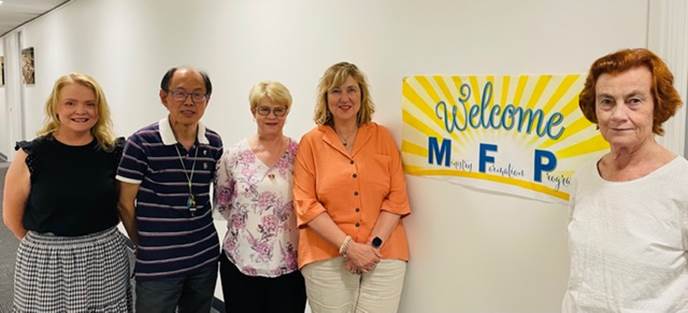
missing Fr Paul Cashen MSC.
In the latter area, which is not for everyone, Annette believes that Ministry Formation is an “intentional process about discerning one’s vocational call with God and the Church”. She has seen God working in the candidates’ stories and their lives. And “it is the Church who calls a man to the permanent diaconate and recognises his gifts.”
Annette hopes that this unique vocation can develop and grow, especially in the area of ministry on the margins. She sees a valuable place for Deacons in hospital and prison chaplaincy, and in parish settings reaching out to those who are not attending church. However, there is also a challenge in Deacons getting pulled to more administrative roles, and being “changed” by their entry into the hierarchy. Annette appreciates the ability of Deacons to offer sacramental care at the margins, especially as people in married life who know themselves well and maintain relationships for pastoral ministry. They have experience, skills and gifts, and she would like to “acknowledge the richness and value that brings to the church.”
Annette asks about the possibilities for women in such diaconal ministry. She knows that expecting a Deacon working in Adelaide to minister in a country region is impractical, but there may be women available in situ. In her own experience of hospital chaplaincy, Annette knows the value of people representing the Church. It is “all about meeting people on the margins.” There are people who have identified as Catholic their whole lives, but only reach out to the Church in times of crisis. At those times, to offer the presence of sacramentality and the sacraments is a great example of the value of diaconal ministry.
To register for our upcoming events: Retreat (1-3 September) or Webinar (3 September), please visit https://liturgyonthemargins.org/events/
 Liturgy on the Margins