Dominique Galea, 1 August 2024
Today it is my great pleasure to share Dominique’s own words as she reflects on her ministry, liturgy and the diaconate. Thanks, Dominique!
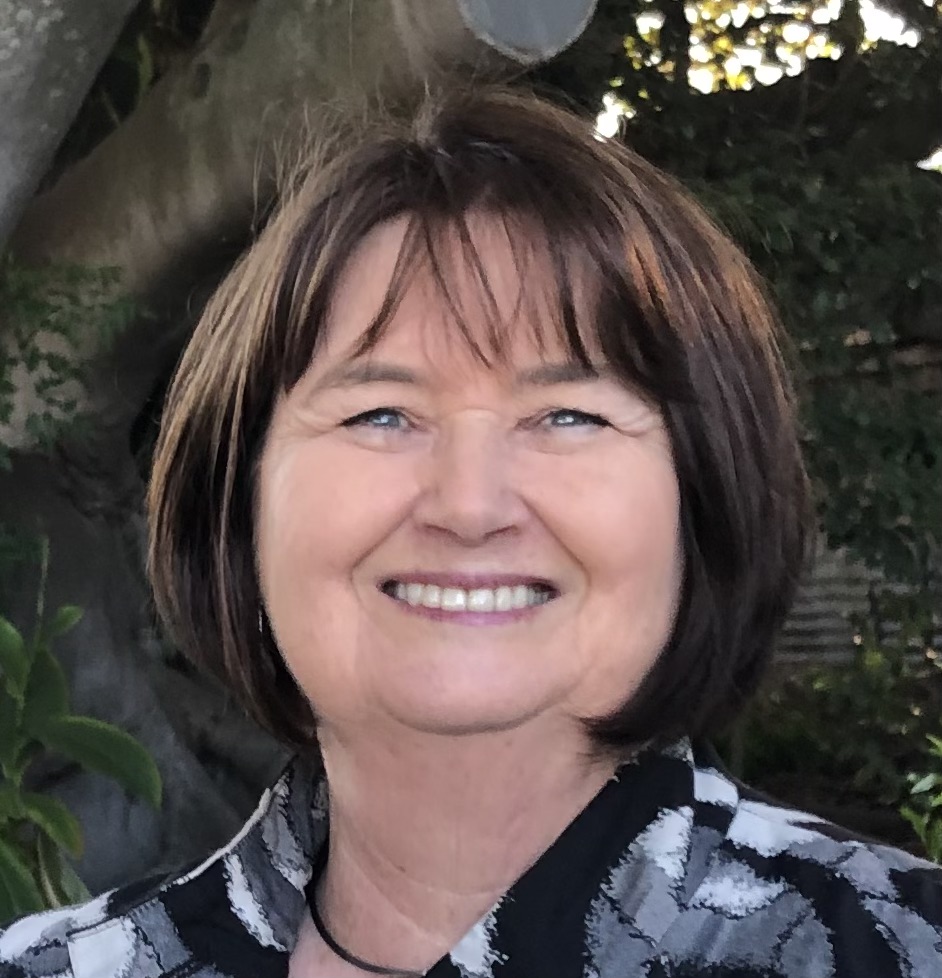
Elizabeth: Tell me a bit about your own ministry journey.
I once heard a religious sister being interviewed on television saying that when she was born, she had ‘Catholic’ stamped on the soles of her feet and I thought to myself, “That’s me!” I was brought up and educated as a fifth generation Australian, Irish Catholic. My earliest memory of being at Mass was at about age 4, when my mother pointed to the Eucharist being held up and said, “That’s Jesus.” I have not stopped believing that since.
My earliest ministry experience was as a university student where I played the guitar and sang at the Masses that were celebrated both on and off the campus, twice weekly, for the Catholic students by a young priest who was the university chaplain. The music ministry is one which I still enjoy, and which has been a part of my involvement in every parish that I have belonged to since then.
In my current parish I have been involved in many other different ministries over the years as well, such as children’s liturgy, teaching in sacramental programs, special minister of the Eucharist, catechist in public schools and reader. I have also been a member of the parish council and chairperson of that council. However, the most surprising ministry that I was asked to be involved in by the parish priest at the time was that of Acolyte! As soon as Pope Francis gave the green light, the parish priest commissioned a number of women as well as men as Acolytes. That ministry was however short lived due to the parish priest retiring and it not being taken up by his replacement, as well as, I believe, a number of instructions from the Sydney diocese putting paid to the concept of women as Acolytes. I am still in awe at being chosen to be part of this brief experience, as I never thought that it would happen in my lifetime! Sadly, perhaps I was correct!
I think that the most beneficial ministry in the parish was when they had family Mass groups, where there were groups of parents (mainly mums) who got together and planned out the involvement of their children in the Mass by doing the readings and acting out scenarios to interpret the Gospel. For me, that process really had the effect of not only educating the children in the liturgy of the Mass but the adults who were preparing the liturgies as well. I carried that knowledge into my work as a primary school teacher, where I was involved in the ministry of Religious Education Coordinator in a number of Catholic schools.
I was fortunate that my parish was associated with the Catholic Theological Union, which was accepting lay people, including women, to study for a theology degree alongside the seminarians. Even though I had three young primary school aged children and a very busy husband (who was principal of a Catholic high school), I felt called to enter into studies there, primarily to delve deeper into my Catholic faith. What I found was a richly rewarding creative process where I felt like I was ‘filling up’ and I didn’t even know that I was ’empty’. I emerged from these studies with a Master of Arts in Theological Studies, which opened doors to other possibilities, including lecturing in Systematic Theology at the Australian Catholic University.
Another very important aspect of my journey was learning about the existence of the theory of Enneagram personality types. I have done much study on this amazing insight into spirituality over the years and I have offered many spirituality workshops to Catholic school staffs and the wider community on this topic. The person who introduced me to The Enneagram was a spiritual director. Over the years of knowing him, I became increasingly drawn to the ministry of spiritual direction and due in part to holding a degree in theology, I was accepted to train as a spiritual director at The Centre for Religious Development, North Sydney, graduating in 2007. This is the ministry which now occupies most of my time and which continues to enrich my spirituality and faith development, as I have been honoured to explore how God is working in people’s lives both as a presenter at retreats and in offering spiritual direction to the participants at the retreats and most recently to Religious on a six week sabbatical program. I also have a private practice as a spiritual director.
Elizabeth: Tell me about an experience of celebrating liturgy that was very meaningful with a community ‘on the margins’.
What comes to mind for me in my life when thinking about celebrating liturgy with a community ‘on the margins’ is the Catholic group at university mentioned earlier which was called CHRISOC. Back in the 70s, in university life, being a person of faith was literally ‘on the margins’, as it certainly was not ‘cool’, at university, to profess any religious faith, let alone a belief in the existence of God. These liturgies were celebrated as home Masses with a small group of students by a young priest with whom we could identify and confide. In fact, it was he who introduced me to the actual concept of spirituality!
At these liturgies we received communion under both species, which at that time was a rather radical practice. Because the celebrations were so intimate it made for a very close group of participants where everyone felt welcome and understood, as well as giving them the feeling of belonging to something larger than themselves, where there was an atmosphere of acceptance. These liturgies flowed from being part of a wider group made up of similar campus groups from various Australian universities, forming the Tertiary Catholic Federation of Australia (TCFA) which held conferences led by excellent presenters who quite literally formed us in our faith. When I think back at the breadth of knowledge that we were exposed to, such as the work of Teilhard de Chardin and the Catholic social teaching of Option for the Poor, to name a few, I realise how privileged a small group we were. Many of the members of this group went on to become university professors in Theology and Education or to become involved with the work of Jean Vanier and Mother Teresa. Two of them have since become priests. We did not at the time realise that we were being formed as the future leaders of The Church.
Elizabeth: What do you think is made possible by the ordained diaconal ministry?
To the question of what I think is made possible by the ordained diaconal ministry, I would say that there are a number of people, such as those mentioned above, who have had gifts given to them by the Spirit and who have been formed in the Faith, who are not able to use these gifts to the full, by virtue of the fact that they are married men or women. The Ordained Diaconate would be a way for faith filled men and women to give witness to this giftedness.
A particular testament to this is the number of wonderful homilies produced by individuals on the Australian Women Preach podcast. These women have theological degrees and have been well formed in their faith. They have much wisdom to offer but are not recognised, despite feeling called, as people being worthy of serving their God and sharing these gifts in the same manner as men. The world is missing out on half the population of those who have been given this gift of the desire to share their faith and to form others in that Faith. Women being able to access the Ordained Diaconate would be a wonderful recognition, on the part of the Church, of the gifts being bestowed upon half of the population of God’s creation.
Dominique’s website is dominiquegalea.com
You can listen to her homily on the 12th Sunday of Ordinary time on Spotify: https://open.spotify.com/episode/6D9HM8tM6YibVLmL1zLsZo
Join us to celebrate the Feast of St Phoebe with a free webinar on Tuesday the 3rd of September from 7:30pm – 9pm AEST. Geraldine Doogue AO, Fr Frank Brennan SJ, Dr Sandie Cornish and members of Australian Catholics Exploring the Diaconate will reflect on synodality and access for women to the diaconate, along with personal stories about Australian diaconal ministry. Register at the below link.
 Liturgy on the Margins