
Joanna Thyer, 24/10/24
Recently, one of our members of Australian Catholics Exploring the Diaconate was a panel speaker in Rome at another side-of-the-Synod event. Thank you, Joanna! She shares her experience here in her own words.
My feeling about speaking at this adjunct event for the Synod – about women who feel called to the Diaconate, is that it has been quite a profound and surreal experience, and I have felt honored to be part of it. To be immersed in the atmosphere of the World Synod at this time – at such a pivotal time in the world generally – when there is so much heartache, distress and uncertainty, certainly, has been extraordinary. Having not been to Rome since the 1980s it also has been quite an experience coming back again 40 years later! The world has changed and so have I!
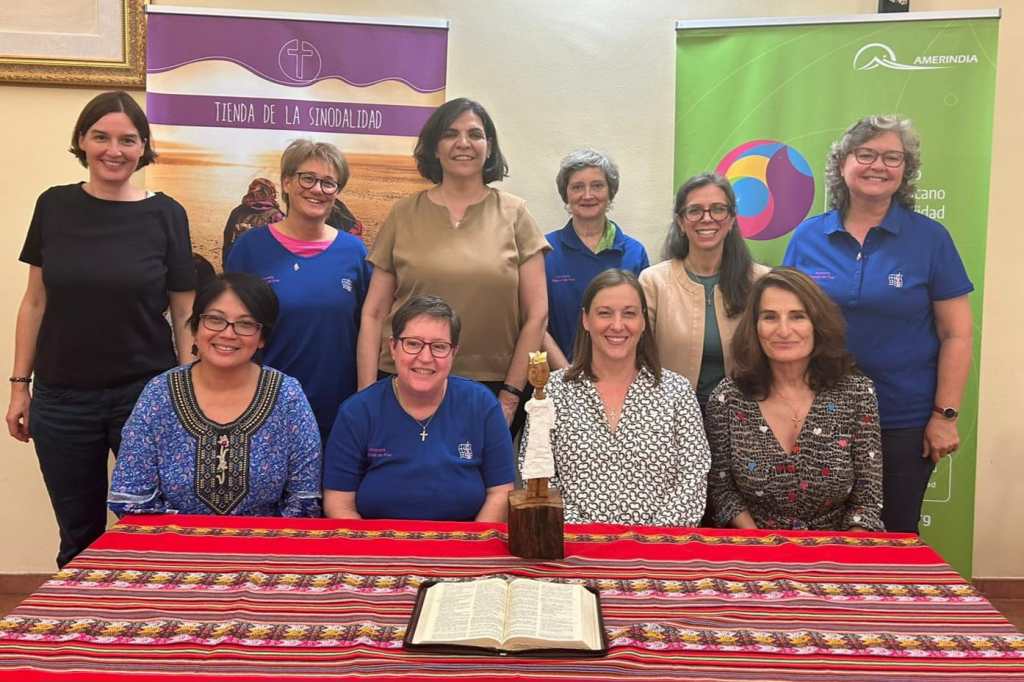
Our women deacons’ session was hosted by the South American, Amerindia group, in a building close to the Vatican. As well as myself, our speaker panel included an American, a Filipina, and a German woman.
I am often reminded of the Ignatian sensibilities of Consolation and Desolation that have followed me all my life. Whilst on one level it has been highly disappointing that the issue of women deacons is officially off the agenda of the Synod – on the other hand like the proverbial elephant in the loungeroom –it is very much on it! This is the irony; because so many people have been talking about women deacons, and whether this issue will be reconsidered by the Synod, and by Pope Francis.
At a time such as this here in Rome, the moments of Consolation – hope, feeling close to God; and other moments of Desolation – where cynicism might set in, were counteracted by the level of interest and engagement in the room, and the fact that women from around the world were giving their testimonies, all from their different life experiences, and their personal call to ministry. This was a testament to Consolation. There is hope, regardless of what others may say.
As an ‘adjunct’ event, some more conservative members of the Synod have allegedly called the issue of women deacons a ‘niche’ issue, saying that it is the darling of western sensibilities, and not so relevant to the wider scope of the Synod. Yet this is entirely incorrect – it is very much a core issue that affects women around the world. Also, if the favourable response from the broad range of European clergy and expert theologians present at our event is any indication, I felt very much heard and affirmed by the whole discussion.
I guess a key clarification point that I made in my talk echoes the words of a Belgian married deacon, Geert De Cubber, a member of the Synod of Bishops on synodality whose comments were recently reported by the Vatican News. Synod delegates are discussing women deacons, he reminded reporters. He referred to deacons as Bridge Builders –bridge builders between the Church and the rest of society – through pastoral and spiritual work, in particular, to marginalized communities.
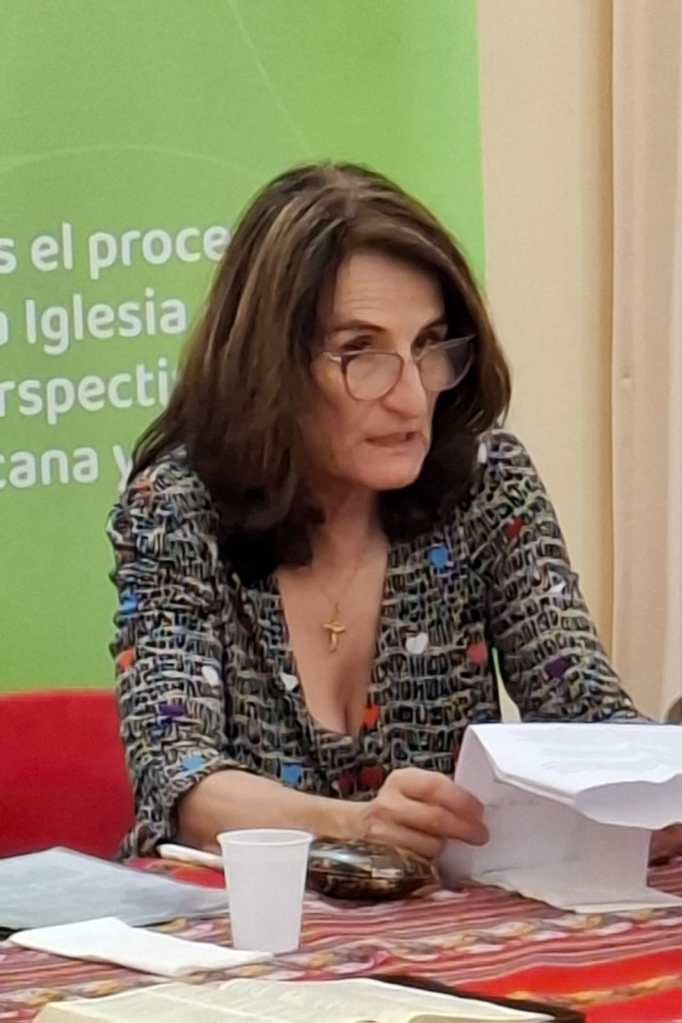
As I see it – the further step in that ‘bridge building’ is to take with it all that goes with sacramental ordination – to be able to anoint the sick, baptise, and preside at weddings and funerals in the Church. Anointing the sick is particularly a key issue for women deacons. It is independent of the priesthood – yet collaborative with it. Being ordained a deacon means that women deacons could be ‘contracted’ by parishes to do work when required – as I mentioned in my Feast of St Phoebe talk – in the same way as being a contractor for other archdiocesan funded initiatives.
This is not a radical initiative – it is fidelity to the tradition, and in particular to the New Testament historical Christian tradition of a communal Church on ‘the Way.’ This is truly the Church in the world, and needed now more than ever, in terms of reaching out to all communities, other faiths, and people of no faith, since people are crying out for meaning and spirituality.
Two days after the women deacons’ event, I was interviewed by a young American Theology student – Sean. He wants to do a dissertation on the Synod and spoke about having a fascination with ‘networking systems’ in the Church. The T-shirt he wore on the day of our women deacons talk had the words– ‘Be Brave Pope Francis!’ on it. I noticed this with interest, because in a world where often young people engaged in Christianity take a neo- conservative stance, it was refreshing to talk to him and feel his enthusiasm about a church that reflects networking – one that is community focused and has a diverse outreach.
I also attended a talk at the Jesuit Curia Hall on Thursday evening with a four-person panel speaking on The Exercise of the Primacy and the Synod of Bishops. It was a privilege to hear Archbishop Tim Costelloe from Perth – a consultor at the Synod – and Catherine Clifford – Canadian Theologian, two of the speakers there. Both of them alluded to the circularity of the papal role and the role of bishops: a reciprocal relationship of listening and discerning, rather than a hierarchical, power based, and clericalised one.
I am reminded of the words of Synodal delegate Dominican Fr Timothy Ratcliffe who has apparently spoken about how a strong sense of baptismal dignity is now needed to help the Church do things in a more communal and synodal way.
In his September Meditation for the Synod, entitled, ‘Resurrection: Searching in the dark,
John 20:1-18’, he reflected:
“We must dare to bring to this Synod the deepest questions in our hearts, disconcerting questions which invite us to new life. Like those three seekers in the garden, we must attend to each other’s questions if we are to find a renewed way to be Church.”
 Liturgy on the Margins