
Deacon Memo Rodrigues and Liliana Rivas, 14 November 2024
Memo Rodriguez was born in Mexico and, when he became involved with the church, he realised it meant more than liturgical ministry – it was also about service. He took part in the youth group’s outreach ministry, which was religious education at an orphanage. Then he started working with children living on the streets and HIV/AIDS patients. However, as Memo married Liliana Rivas and they started a family, they were encouraged to take a step back from these roles.
In the year 2000, Memo, Liliana and the family moved to California in the US. Here they got involved with ministry to the Latino community, who they discovered were very much on the margins of the society. Despite being 20% of their city’s population, it was as if “they are invisible, like they don’t exist”. They even heard that some parishes were proud of being “Latino-free”. There were challenges with language and conflicts with the English-speaking community, who did not understand their needs. Memo also observes a feature of their culture is that ‘Catholic guilt’ takes the form of “I’m not worthy.” This manifests as Latinos standing at the back of the church and not feeling that they belong. So he found ways to bring people in and include them, to value their contributions, language, culture and music.
Liliana takes over with her tale. When they arrived in the US, she had three young children and a visa which didn’t allow her to work. She went to Mass every day and, to alleviate her sadness, the priest started giving her small jobs to do. He asked her to be in the English choir, to assist with the music and to serve the Hispanic community. She organised cultural celebrations and helped people with the complicated process of finding sacramental certificates from their home parishes. Before the internet, these churches were very difficult to communicate with; it seemed they were “on the other side of the world”. After some time, Liliana herself felt that, “I want to be a deacon and help them with all the problems they have.”
The idea of the diaconate was certainly “in the air” at the time. There was one parishioner who was orphaned in Mexico and had grown up in government institutions. No one had attended to her baptism and, years later in California, she had to have a civil marriage. To her, this meant that she was “not worthy and living in sin”. Finally, she was diagnosed with cancer and coming to the end of her life. The community “had to scramble to put things together to have the baptism and marriage at her bedside a few days before she passed away.” Memo realised that if there had been an ordained minister who shared her culture and language, she could have received these sacraments a lot earlier.
That incident “closed the deal” for Memo. He wondered if “Maybe I’m that one, to serve the people with knowledge and authority – in the name of the Church, not my personal initiative.” God was also working at other levels. The parish priest was trying to find ways for the Latino community to participate more sacramentally, and to be baptised in Spanish. Liliana said to him, “I will bring you my husband, as I know that I can’t.” She went home and told a surprised Memo that the priest was going to ask him to become a deacon. Finally, the priest invited him to dinner and “popped the question” about applying for diaconate formation.
And that was the start of Memo and Liliana’s journey as a deacon couple, 19 years ago. As they became one body in marriage, so they have shared in the whole process. 13 years ago, Memo was ordained to the Los Angeles Archdiocese, and he describes it as “making the reality of the Church – the people of God, the sacrament of salvation – more present in the lives of the community.” This is not just in the church buildings, but wherever he goes. People recognise him as a deacon all over, including in the shops or park, and ask him to give them a blessing.

As a deacon, he can do so much more for people who have been marginalised by the church. One group is Latina girls who reach their 15th birthday. It is a special coming-of-age celebration called Quinceañera. However, in the US it involves “extravagant requirements” to hold a Mass to give thanks to God for that time. Instead, Deacon Memo goes to their home or other venue and gives a special blessing before the festivities. It is “meaningful… that someone from the Church is present there to bring a sense of spirituality, prayer and blessing to their party.” He also reaches out to the LGBTQ+ community by participating as a deacon in the archdiocese’s Annual Pride Mass. In doing this, he hopes to communicate that the Church is saying, “We are sorry that we have marginalised you, but you belong here and you are children of God.”
The archdiocese has an abundance of deacons; there are about 400 altogether and several in their parish. They were great role models for Memo, as were the wives for Liliana. After some time, they were called upon to do formation for prospective deacons and their wives. Memo and Liliana facilitate one of the five formation years, and give the men practise in such things as baptisms and marriages. They talk to them about being “a simple person with a good heart, who loves and serves their community.” It is “very rewarding” to see their mentees ordained, growing into the servants they are meant to be. Memo and Liliana see this as extending their service, and there is a bit of themselves in the new deacon and his wife.
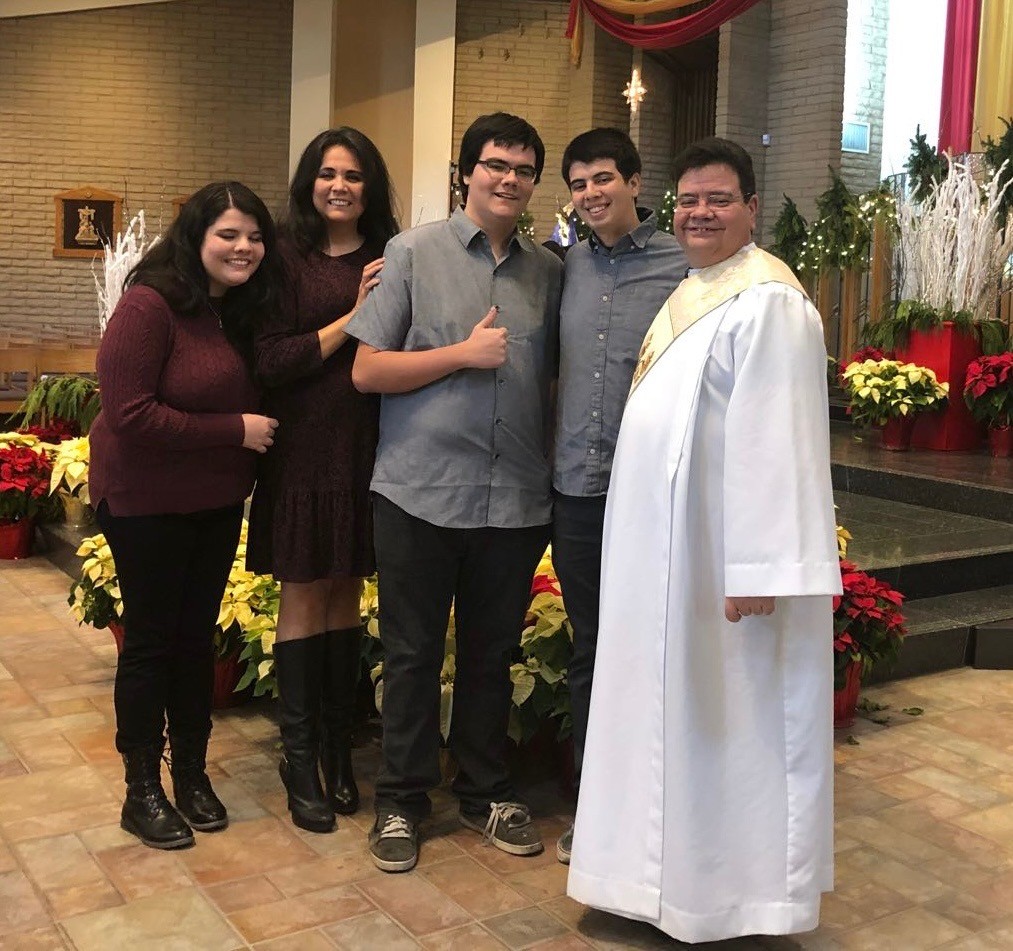
Memo and Liliana have experienced the value of being empowered to minister in the name of the Church. It is a blessing for those on the margins and it is strengthened by the liturgy which belongs to the universal Church. Wouldn’t it be wonderful if more bishops could do the same? Wouldn’t it be important for women to be included as ordained ministers?
 Liturgy on the Margins
A lovely story and good outcome for Memo – but what about Liliana?
LikeLike