
Deacon Greg Lowe, 12 March 2026
Today, Deacon Greg reflects in his own words on his inspiring ministry. Thank you, Greg!
Elizabeth: Tell me a bit about your own ministry journey.
My ministry has changed over the years. When I was fist ordained, a lot of my work was liturgically based: assisting at the Mass, conducting baptisms and funerals and witnessing at weddings. This spoke to my identity as a deacon. This liturgical activity and the encounters with the people connected to these events remains important.
However, my ministry has extended beyond liturgical service to encompass being of service. In other words, I think my ministry has grown me as a person, interiorly-speaking. For example, being a deacon has impacted my work with migrants and refugees. At the same time, being available and being present to people who are vulnerable and require assistance has shaped my understanding of diaconal ministry and what it is to be a deacon. At the end of the day, who you are to the person in need is most important and can make all the difference and I believe the grace of ordination has helped in this regard.
What I have just said may seem obvious but let me explain further. There have been times when my patience has been sorely tested and yet I have remained calm for the sake of the other in the pursuit of their legitimate need being met. And I don’t know why or how! I am not sure I have explained myself very well but suffice it to say that when you find yourself being kind when everything in you has had enough of the situation or the person, or both, it is then that you know it is not you doing the work needed. It is a humbling experience that makes you realise that God loves humanity more than we do and desires the best for everyone. It is in these moments that you realise Jesus’ compassion cannot be fathomed and if it were, it would make you come face to face with your own reality and being which just cannot comprehend such generosity and, perhaps, does not have the capacity to generate such self-giving! Maybe that is where the grace of ordination ends and the grace of baptism begins – but that is a thought to be explored at another time.
Elizabeth: Tell me about an experience of celebrating liturgy that was very meaningful with a community ‘on the margins’.
An experience of celebrating liturgy that was very meaningful with a community ‘on the margins’, occurred when I was asked to lead a funeral liturgy for an aboriginal community. I was only asked because a priest was not available.
Although the community identified as Catholic, most of the members were not familiar with liturgy. However, the deceased was a much-loved elder of the community and people gathered at the Church first rather than going straight to the cemetery. They wanted to be in community, and they wanted to honour the deceased before God. The liturgy provided a framework for people to do both in a safe space.
I think the homily was important in this liturgy as it reaffirmed a sense of identity among the people by talking about ‘our ancestors in the faith’ and used language that people could engage with as it linked the readings to the present sadness and situation while offering the hope that life is eternal.
The occasion also provided an opportunity for individuals to come to the front to the coffin and pay respect to the deceased. This was the moment of immense outpouring of grief through tears and wailing. It was prolonged but necessary. The liturgy can provide for this because this was very much an event from the community for the community and, importantly, reassured the community that God was also there: the people were in a church, there were prayers and there was someone ‘from the Church’ there just for them.
Elizabeth: What do you think is made possible by the ordained diaconal ministry?
I think the ordained diaconal ministry assists in enabling the Church to provide liturgical opportunities that would otherwise not occur. People need ritual for many reasons and liturgical ritual can be of great assistance to people of faith, especially when they are feeling vulnerable. In a liturgical ritual, the deacon can bestow the liturgical blessing, and this can be a source of comfort to the person – they have been formally blessed by an ordained minister. For some people, this is meaningful at a very personal level. This intuition is important because it speaks to the reality that liturgical worship rightly orders our lives. The Church understands this profoundly and so even when in persona Christi cannot occur, the church provides this practical service to the faithful in vivens Christi, as it were, through the deacon.
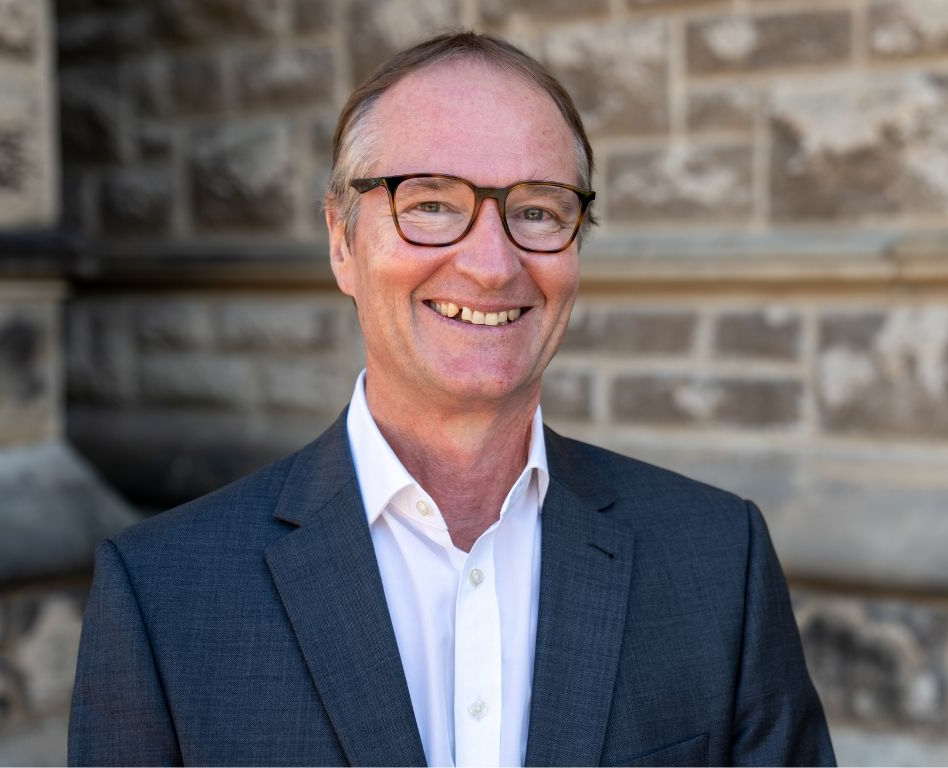
Rev. Dcn Greg Lowe is the Director of the West Australian Catholic Migrant & Refugee Office for the Archdiocese of Perth. He has worked with migrants, refugees and persons seeking asylum for over 30 years and holds a Graduate Diploma in Pastoral Care & Human Mobility from the Scalabrini International Migration Institute, Rome. He was ordained Deacon by Archbishop Barry Hickey in 2006.
 Liturgy on the Margins