Adelaide Hills Convention Centre, Hahndorf Discovery Parks
Deborah Robertson and Elizabeth Young rsm, 6 March 2025
Firstly, from Deborah:
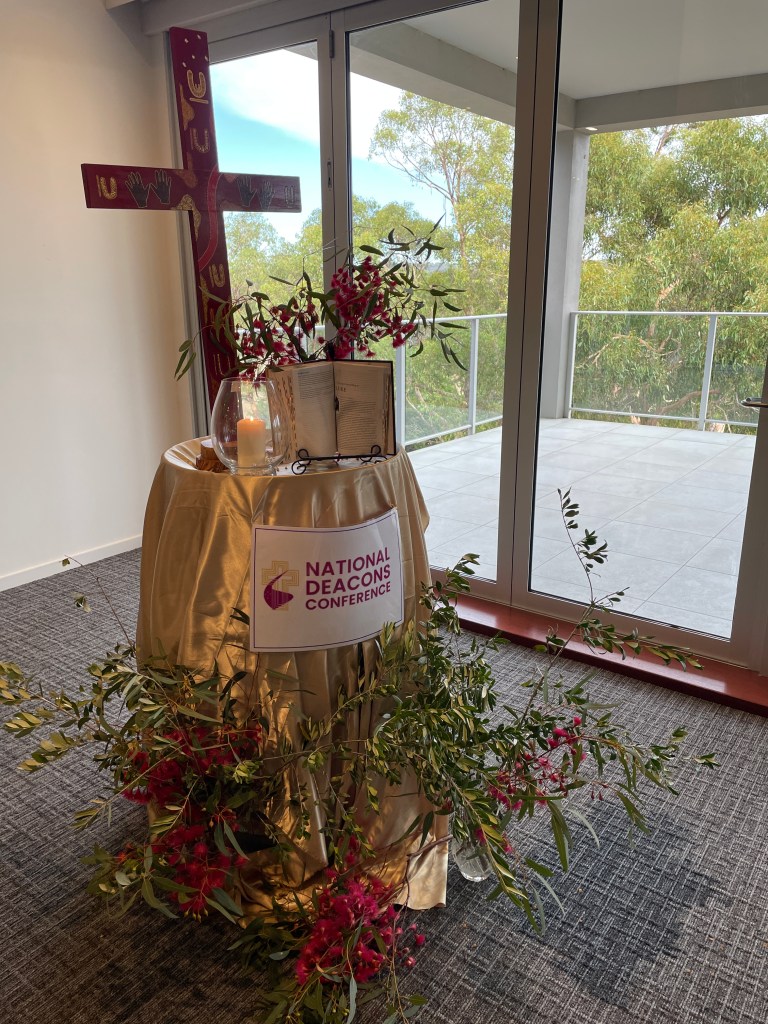
On Thursday 27th February around 80 participants gathered for the biennial conference for Catholic deacons in Australia, their wives and other friends and associates. Papal Nuncio Archbishop Charles Balvo attended for the whole conference along with Fr Khalid Marogi representing the Australian Bishops Conference, and for much of the time Archbishop Patrick O’Regan from Adelaide and Bishop Karol Kulczycki SDS of Port Pirie. The cooperation of the Adelaide Archdiocese was very apparent in the presence of administration and liturgy staff.
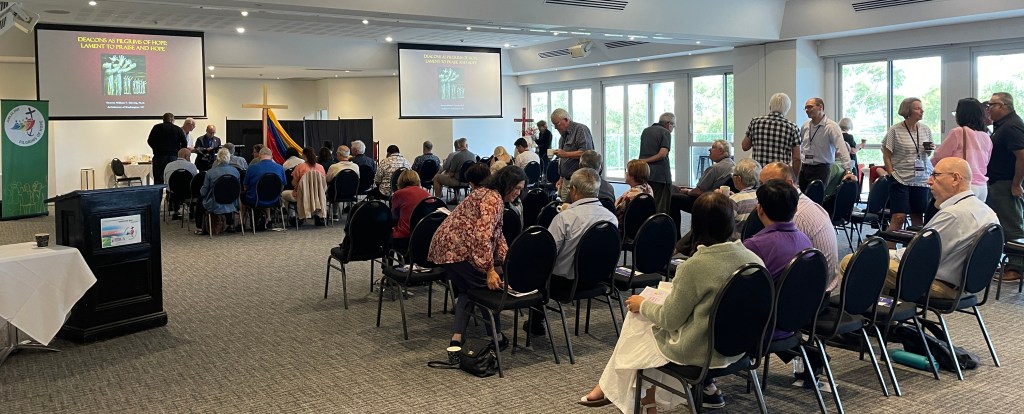
A number of workshops addressed topics from theology, spirituality, and pastoral administration and care. The presenters were: Deacon Dr William T Ditewig from the US; Rev Dr John Fr Collins, Deacons Tony Hoban and Roderick Pirotta from Parramatta; Rev Dr Michael Trainor, Ms Pauline Connelly, Dr Jennifer O’Brien, Ms Emma Grieve and Ms Val De Brenni from Adelaide.
One of the highlights for me was the scripture study of Fr Michael Trainor who gave a very clear explanation of the presence of women and their roles in the Pauline writings as well as the Gospels. Phoebe was unequivocally presented as a deacon leading a community, although the current question of ‘women deacons’ was not directly addressed. However, all those present should have gone away with an increased understanding of the scriptural and traditional presence of women in ordained ministry in the early Church and its loss throughout the centuries.
Meeting with deacons and hearing their stories was a great privilege and I certainly have come away with a greatly enhanced knowledge about how the diaconate works (or not!) in various dioceses of Australia and some of the challenges that need to be addressed.
There was a lot of time for networking and socialising. I was very impressed that Sr Elizabeth Young knows almost everybody and is known by almost everybody. Her lessons in networking would be well worth attending! It was also great to meet Joanna from our ACED group in person.
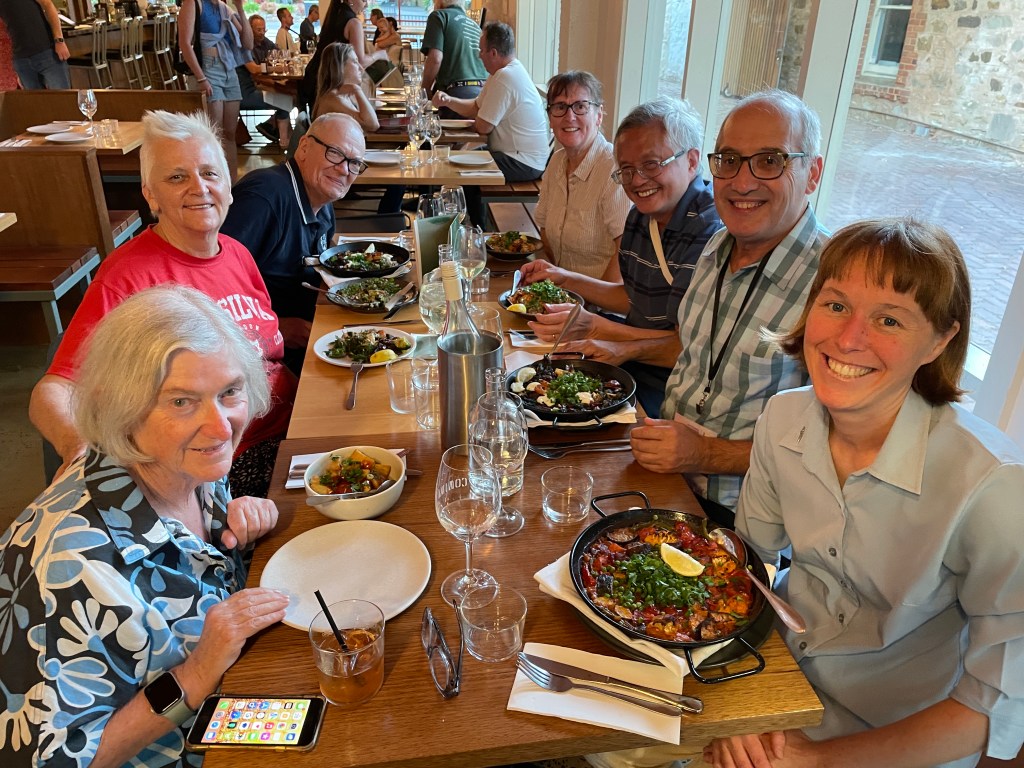
Deborah, Sandi, Dn John, Kathryn, Dn Michael, Dn Rod and Sr Elizabeth
The conference ran from Thursday afternoon until Closing Mass and morning tea on Sunday morning (2 March). The theme was” “Pilgrims of Hope: Believe what you read, teach what you believe, practice what you teach.” The experience has certainly enhanced my commitment to engaging with the Jubilee Year and I will take that with me as I continue my van trip for the next 3 months. It would be remiss of me not to mention the sadness that I felt as I witnessed the camaraderie of the deacons and experienced the power of their ordination in the way that they embrace their work and are supported by the official Church (despite acknowledged lack of support in many dioceses and parishes) in a way that has been denied to me, and other women, trying to live out the diaconal ministry to which they have been called but are not permitted to name as such.
Nevertheless, I was very welcomed and included as an observer and I learnt a lot from the presentations and being with the group. Congratulations to the organising group led by Deacon Paul Crowe and I encourage anyone who can attend the next conference in Brisbane in 2027 to do so.
Secondly, from Elizabeth:
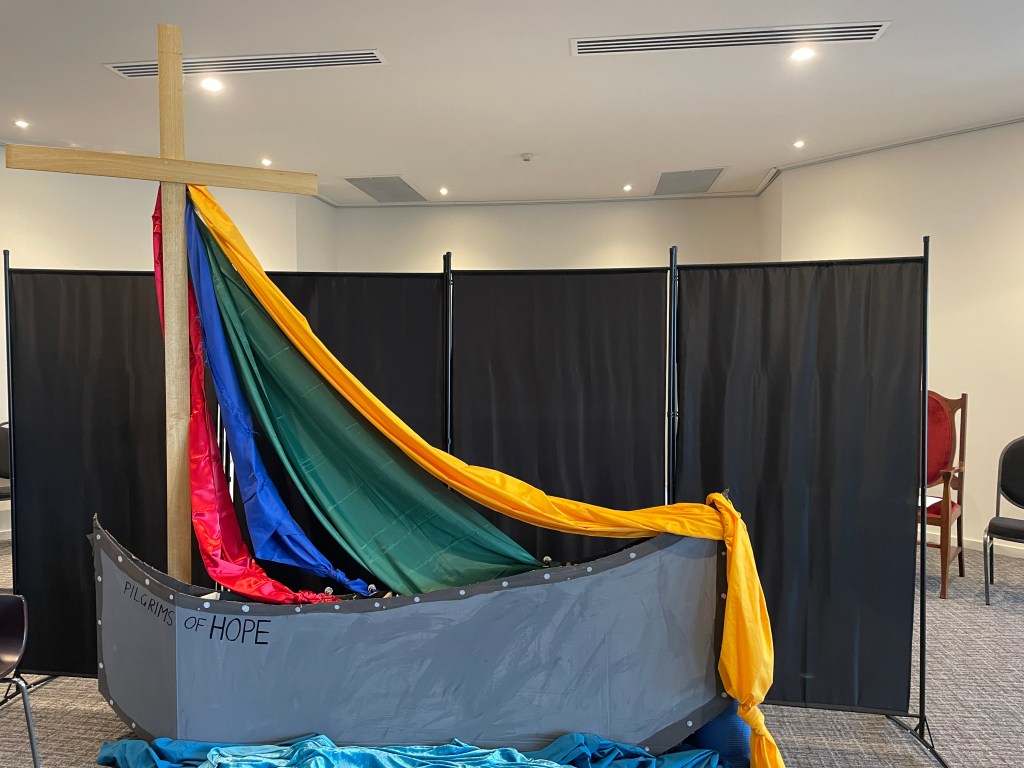
Pilgrims of Hope
This Jubilee year we are making a pilgrimage journey together of joy and hope! As we sang together the stirring words of a hymn written especially for the diaconate, we celebrated God’s call that draws us ever onwards.
I was likewise touched and encouraged by the National Deacons’ Conference for 2025. It was my second such conference, so I spent a lot of time renewing acquaintances and catching up on news. However, there was such a warm welcome from every participant I spoke with. They were interested in our ACED group and reasons for attending, and found much cross-pollination in our similar ministries. In fact, for me, it was very good professional development with those who have comparative functions and official relationships with their bishops.
Believe What You Read
These words begin a phrase used at a deacon’s ordination, which Dn Bill Ditewig broke open for us in his keynote speeches. This is heard in the rite as the deacons receive the Book of the Gospels. In another symbolic moment in a Bishop’s consecration, two deacons hold the Book of the Gospels over the head of the new Bishop. In other ways, however, we were challenged to better understand and believe our faith tradition throughout the conference.
Bill reminded us of the whole point of ordained ministers: “For the nurturing and constant growth of the People of God…which work for the good of the whole body. For those ministers, who are endowed with sacred power, serve their brethren, so that all who are of the People of God…may arrive at salvation.” (Lumen Gentium #18) And as Dr Jenny O’Brien recalled, this is in the context of the Church’s ministeriality, which is itself a sacrament of salvation for the whole world (LG #1).
As Deborah says, we were privileged to get to know the scriptures better through the scholarship of Fr Michael Trainor. He started with the diaconal ministry of Jesus, which arose in a particular context; the interrelated aspects of property, economics, politics, kinship and religion of his homeland. Galilee was occupied territory, where some advocated violent rebellions and others esoteric spiritualities. However, Jesus offered an “alternative narrative”, which was grounded in his experience of God and the basileia – reign or kinship – of God. He sought to renew his peasant world in their relationships with God, themselves, each other and creation.
The second day, Michael extended his study to the diakonia/diakonos/diakoneo words in the earliest communities of Jesus-followers. It was amazing how the words were used in such diverse ways. It ranged from simple service of the secular kind or in administrative language to Christian service to indirect Christian ministry roles to clear Christian ministry titles (St Phoebe). Sometimes the same word-stem is translated to ‘ministry’ and ‘servant’ in the same sentence! Jesus, Michael concluded, is the “prime minister (deacon)” and as disciples we seek to mirror his diaconal ministry. While the early NT period is unclear (Acts 6, for example, deputes the apostles to “diakonia the word”), the latter writings show development in the ministries of episkopos, presbuteros and diakonos (male and female).
Teach What You Believe
Over the conference, there were many suggestions for the teaching/preaching ministry of the deacon. Bill called for deacons to make the “critical link” in every liturgy from lament to praise and hope. As deacons represent the people of God in the Mass, they also bring with them all the traumas and sufferings of the world. They also raise the chalice – the symbol of “courageous discipleship”, death and the new covenant. So their ministry should inspire people to be filled with God’s love and ready for mission.
Dr Jenny O’Brien, in her session on Deacons in the Liturgy, reduced the ministry of the deacon to three essential elements: Prayer, Proclamation and Pastoring. She used a quote from Walter Kasper about ecclesial office being a “ministry to other ministries”. Deacons don’t just enable the people of God to pray and deepen their liturgical participation, but also to be equipped and inspired to carry out their own ministries. A deacon is first a listener, and seeks to know and pastor his community effectively through his homily. In this, the faithful may learn more about God, themselves, how God acts and how God wants them to act. Finally, Jenny suggested that deacons as presiders should be warm, welcoming, well-prepared and able to adapt.
Practice What You Teach
Deacons’ practice is not only limited to liturgical functions or pastoral roles. As Ms Val de Brenni explained, we can’t separate the inward and outward journeys. Attention to one’s spiritual life, and commitment to spiritual practice and direction, are very important to support our faith journeys as we then support others. Val gave us some tools for noticing our relationship with God and sharing that experience with others. In today’s world, there are also new avenues to explore, such as spirituality with a new cosmology or within a digital world.
Finally, Dn John Collins led a session on Heart Spirituality and Synodality, making the surprising connection between the Final Document of the recent Synod and Dilexit Nos. If the first is about the “radical equality of baptism” and the second about “affective interiority” then we have some great ingredients for a more God-centred response to the troubles in our world and Church. Deacons, John said, are to be agents of synodality and de-clericalisation. We all need to go through synodal conversions ourselves. Then our response to differences will come from a place of prayer and heart spirituality.
And so I end this reflection on the Conference. There was so much more, of course, but suffice to say that it was all worthwhile and why don’t you plan to attend the next one in two years? Thank you to everyone involved in its organisation and let’s be pilgrims of hope together!

 Liturgy on the Margins
Sounds like a wonderful conference!
LikeLike